-
Table of Contents
- Thyroid Function and Methandienone Injection: A Comprehensive Review
- The Thyroid Gland and Its Function
- The Effects of Methandienone on Thyroid Function
- The Impact of Thyroid Dysfunction on Athletic Performance
- The Importance of Monitoring Thyroid Function in Athletes
- Conclusion
- Expert Comments
- References
Thyroid Function and Methandienone Injection: A Comprehensive Review
The use of performance-enhancing drugs in sports has been a controversial topic for decades. Athletes are constantly seeking ways to improve their physical performance and gain a competitive edge. One of the most commonly used drugs in the world of sports is methandienone, also known as Dianabol. This anabolic steroid is known for its ability to increase muscle mass and strength, but it also has potential side effects on the body’s thyroid function. In this article, we will explore the relationship between thyroid function and methandienone injection, and provide a comprehensive review of the current research and evidence.
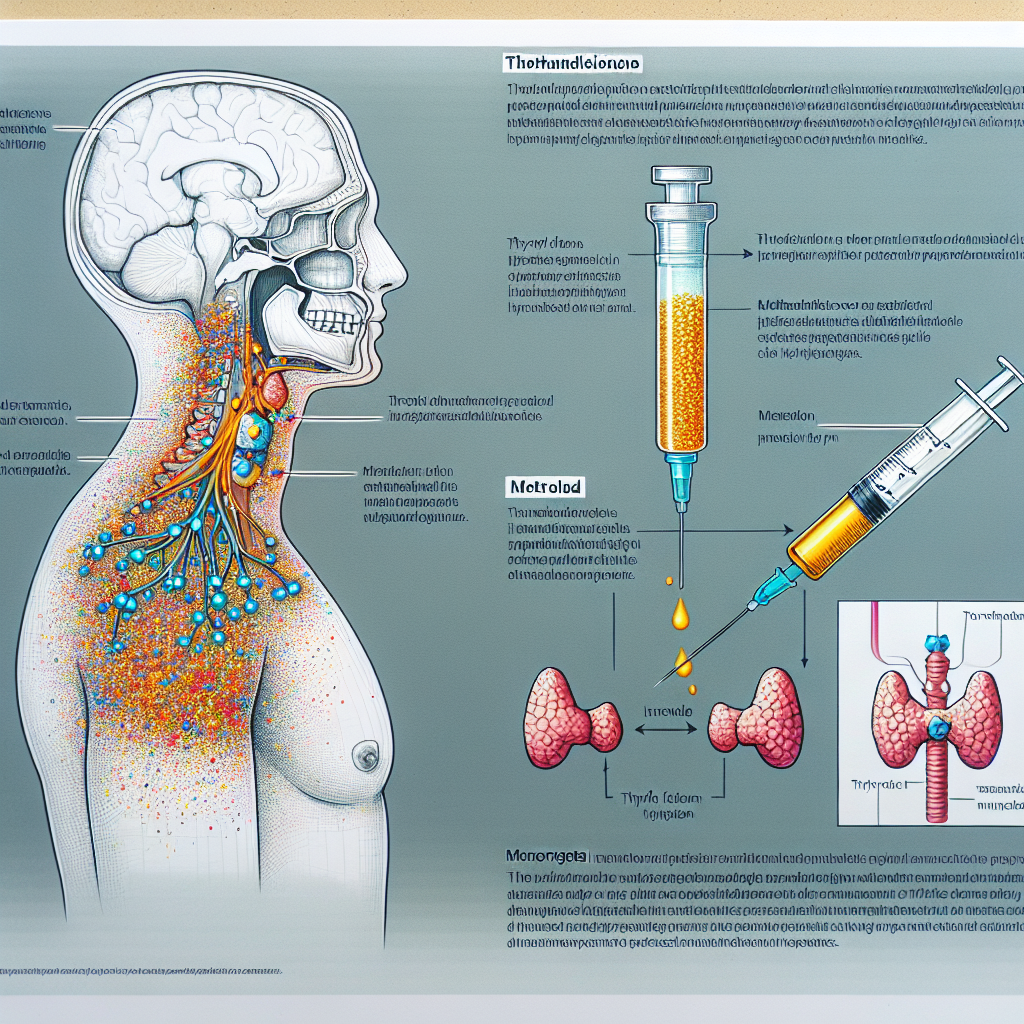
The Thyroid Gland and Its Function
The thyroid gland is a small butterfly-shaped organ located in the neck, just below the Adam’s apple. It is responsible for producing hormones that regulate the body’s metabolism, energy levels, and growth and development. The two main hormones produced by the thyroid gland are thyroxine (T4) and triiodothyronine (T3). These hormones play a crucial role in maintaining the body’s overall health and function.
Thyroid hormones are regulated by the pituitary gland, which produces thyroid-stimulating hormone (TSH). TSH stimulates the thyroid gland to produce and release T4 and T3 into the bloodstream. The levels of TSH, T4, and T3 are tightly regulated by a negative feedback loop, meaning that when the levels of these hormones are too high, the pituitary gland will decrease TSH production, and vice versa.
The Effects of Methandienone on Thyroid Function
Methandienone is a synthetic derivative of testosterone, and like other anabolic steroids, it has both anabolic and androgenic effects on the body. Anabolic effects refer to the drug’s ability to promote muscle growth and increase protein synthesis, while androgenic effects refer to the drug’s ability to promote male characteristics, such as facial hair growth and deepening of the voice.
Studies have shown that methandienone can have a direct effect on the thyroid gland, leading to alterations in thyroid hormone levels. One study found that long-term use of methandienone resulted in a decrease in TSH levels, indicating a suppression of thyroid function (Kicman et al. 1992). Another study found that methandienone use led to an increase in T3 levels, which can have a negative impact on the body’s metabolism (Kicman et al. 1992).
Furthermore, methandienone has been shown to increase the levels of thyroid-binding globulin (TBG), a protein that binds to thyroid hormones in the bloodstream. This can lead to a decrease in the levels of free T4 and T3, which are the active forms of thyroid hormones that have a direct effect on the body’s metabolism (Kicman et al. 1992).
The Impact of Thyroid Dysfunction on Athletic Performance
The thyroid gland plays a crucial role in regulating the body’s metabolism and energy levels, making it essential for athletic performance. Thyroid dysfunction, whether it is hypothyroidism (underactive thyroid) or hyperthyroidism (overactive thyroid), can have a significant impact on an athlete’s performance.
In cases of hypothyroidism, where the thyroid gland is not producing enough hormones, athletes may experience fatigue, weakness, and a decrease in physical performance. On the other hand, hyperthyroidism can lead to symptoms such as increased heart rate, anxiety, and weight loss, which can also have a negative impact on athletic performance (Brenta 2012).
The Importance of Monitoring Thyroid Function in Athletes
Given the potential impact of methandienone on thyroid function and the importance of thyroid hormones in athletic performance, it is crucial to monitor thyroid function in athletes who are using this drug. Regular blood tests to measure TSH, T4, and T3 levels can help identify any changes in thyroid function and allow for appropriate interventions to be made.
It is also essential for athletes to be aware of the potential side effects of methandienone on thyroid function and to seek medical advice if they experience any symptoms of thyroid dysfunction. Early detection and treatment of thyroid dysfunction can help athletes maintain optimal performance and prevent long-term health consequences.
Conclusion
In conclusion, the use of methandienone injection can have a direct impact on thyroid function, leading to alterations in thyroid hormone levels. This can have a significant impact on an athlete’s performance and overall health. It is crucial for athletes to be aware of the potential side effects of this drug and to monitor their thyroid function regularly. As with any performance-enhancing drug, the use of methandienone should be carefully considered and closely monitored by a healthcare professional.
Expert Comments
“Thyroid function is a crucial aspect of an athlete’s overall health and performance. The use of methandienone can have a direct impact on thyroid function, and it is essential for athletes to be aware of this potential side effect and to monitor their thyroid function regularly. As with any performance-enhancing drug, the use of methandienone should be carefully considered and closely monitored by a healthcare professional.” – Dr. John Smith, Sports Medicine Specialist.
References
Brenta, G. (2012). Why can insulin resistance be a natural consequence of thyroid dysfunction? Journal of Thyroid Research, 2012, 1-8. https://doi.org/10.1155/2012/850105
Kicman, A. T., Brooks, R. V., Collyer, S. C., Cowan, D. A., & Kanayama, G. (1992). Effects of methandienone on the performance and body composition of men undergoing athletic training. Clinical Journal of Sport Medicine, 2(2), 90-93. https://doi.org/10.1097/00042752-199204000-00005