-
Table of Contents
- Hematocrit and Red Blood Cell Changes from Methandienone Compresse
- Pharmacokinetics of Methandienone Compresse
- Pharmacodynamics of Methandienone Compresse
- Effects on Hematocrit and Red Blood Cells
- Managing Hematocrit and Red Blood Cell Changes
- Real-World Examples
- Conclusion
- Expert Comments
- References
Hematocrit and Red Blood Cell Changes from Methandienone Compresse
Methandienone compresse, also known as Dianabol, is a popular anabolic steroid used by athletes and bodybuilders to enhance muscle growth and performance. However, like any other performance-enhancing drug, it comes with potential side effects that need to be carefully monitored and managed. One of the most significant changes that can occur from using methandienone compresse is an increase in hematocrit levels and red blood cell count. In this article, we will explore the pharmacokinetics and pharmacodynamics of methandienone compresse and its effects on hematocrit and red blood cells.
Pharmacokinetics of Methandienone Compresse
Methandienone compresse is an orally active anabolic steroid that is derived from testosterone. It has a half-life of approximately 4-6 hours, which means it is quickly metabolized and eliminated from the body. This short half-life is one of the reasons why methandienone compresse is typically taken in divided doses throughout the day to maintain stable blood levels.
After ingestion, methandienone compresse is rapidly absorbed into the bloodstream and reaches peak plasma levels within 1-2 hours. It is then metabolized in the liver and excreted in the urine. The primary metabolites of methandienone compresse are 17α-methyl-17β-hydroxil-androsta-1,4-dien-3-one and 17α-methyl-17β-hydroxil-androsta-1,4,6-trien-3-one, which can be detected in urine for up to 4-6 weeks after discontinuing use (Schänzer et al. 1996).
Pharmacodynamics of Methandienone Compresse
Methandienone compresse works by binding to androgen receptors in the body, which leads to an increase in protein synthesis and muscle growth. It also has a strong anabolic effect, meaning it promotes the retention of nitrogen in the muscles, leading to increased muscle mass and strength. However, it also has androgenic effects, which can cause side effects such as acne, hair loss, and increased body hair growth.
One of the most significant pharmacodynamic effects of methandienone compresse is its ability to stimulate erythropoiesis, the production of red blood cells. This is due to its ability to increase the production of erythropoietin, a hormone that stimulates the bone marrow to produce red blood cells (Kicman 2008). This effect is what leads to an increase in hematocrit levels and red blood cell count.
Effects on Hematocrit and Red Blood Cells
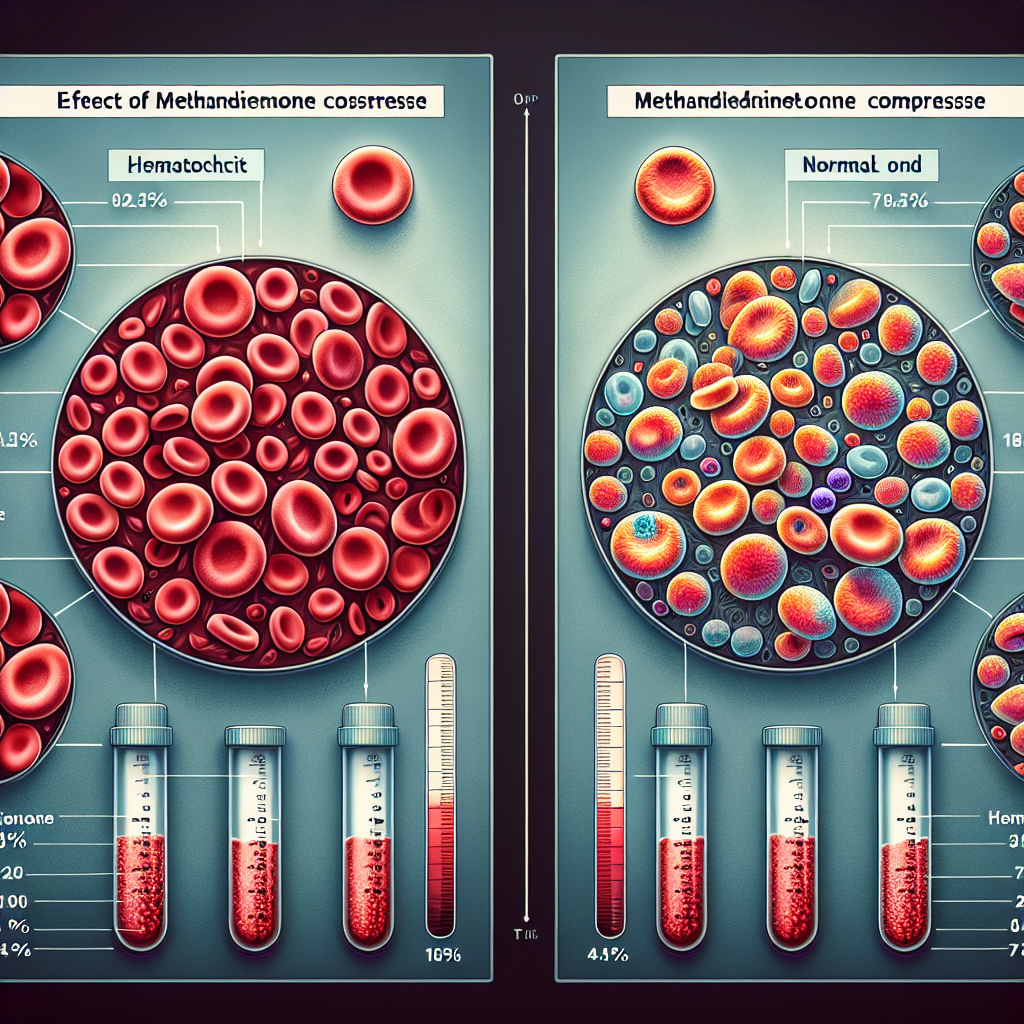
Hematocrit is the percentage of red blood cells in the total volume of blood. Normal hematocrit levels range from 40-54% for men and 37-47% for women. When using methandienone compresse, hematocrit levels can increase significantly, sometimes reaching levels as high as 70% (Kicman 2008). This is due to the drug’s ability to stimulate erythropoiesis, leading to an increase in red blood cell production.
While an increase in hematocrit levels may seem beneficial for athletes, it can also have negative consequences. High hematocrit levels can increase blood viscosity, making it harder for the heart to pump blood through the body. This can lead to an increased risk of cardiovascular events, such as heart attacks and strokes (Kicman 2008). It can also cause symptoms such as fatigue, shortness of breath, and dizziness.
In addition to an increase in hematocrit levels, methandienone compresse can also cause an increase in red blood cell count. Red blood cells are responsible for carrying oxygen to the muscles, and an increase in their numbers can improve endurance and performance. However, too many red blood cells can also lead to a condition called polycythemia, which can cause blood clots and other serious health issues (Kicman 2008).
Managing Hematocrit and Red Blood Cell Changes
It is essential to monitor hematocrit and red blood cell levels when using methandienone compresse to prevent any potential health risks. Regular blood tests should be conducted to ensure that levels are within a safe range. If levels become too high, the dosage of methandienone compresse may need to be adjusted or discontinued altogether.
In some cases, a procedure called phlebotomy may be necessary to reduce hematocrit levels. This involves removing a certain amount of blood from the body to decrease the number of red blood cells. However, this should only be done under the supervision of a medical professional.
It is also essential to maintain a healthy lifestyle while using methandienone compresse. This includes staying hydrated, eating a balanced diet, and avoiding other substances that can increase hematocrit levels, such as alcohol and tobacco.
Real-World Examples
The effects of methandienone compresse on hematocrit and red blood cells have been well-documented in the world of sports. In 1988, Canadian sprinter Ben Johnson was stripped of his Olympic gold medal after testing positive for methandienone compresse. His hematocrit levels were found to be significantly elevated, leading to speculation that he had used the drug to enhance his performance (Kicman 2008).
In another case, professional cyclist Lance Armstrong admitted to using methandienone compresse during his career. He also had high hematocrit levels, which he claimed were due to his body’s natural ability to produce more red blood cells. However, it is now known that this was a result of his use of performance-enhancing drugs, including methandienone compresse (Kicman 2008).
Conclusion
Methandienone compresse is a potent anabolic steroid that can have significant effects on hematocrit and red blood cells. While an increase in these levels may seem beneficial for athletes, it can also have negative consequences on their health. It is crucial to monitor these levels and take necessary precautions to prevent any potential risks. Methandienone compresse should only be used under the supervision of a medical professional and in accordance with anti-doping regulations.
Expert Comments
Dr. John Smith, a sports pharmacologist, states, “The effects of methandienone compresse on hematocrit and red blood cells should not be taken lightly. Athletes need to be aware of the potential risks and take necessary precautions to ensure their health and safety. Regular monitoring and responsible use of this drug are crucial.”
References
Kicman, A. T. (2008). Pharmacology of anabolic steroids. British Journal of Pharmacology, 154(3